Springchat SDK
Lead Android Engineer, sole architect of the chat SDK
Springchat builds the live matchday layer for sports platforms. I architected and built its real-time chat SDK, the piece partners drop into their own apps so fans can talk while the match is still happening.
- production chat SDK for 3 enterprise clients with 1M+ combined reach
- sub-100ms message delivery through WebSocket handling, concurrency tuning and background sync
- client integration time down 40% with a Compose + Kotlin + MVVM architecture and full SDK docs
- build and release time down 50% with GitHub Actions and Gradle work
- reported vulnerabilities eliminated and bug rate down 30% (R8, secure token handling)
- led iOS SDK release reviews for consistent behaviour across platforms
- agent-driven PR-review and release-check workflows across SDK and backend
Screens
- A live match, start to finish
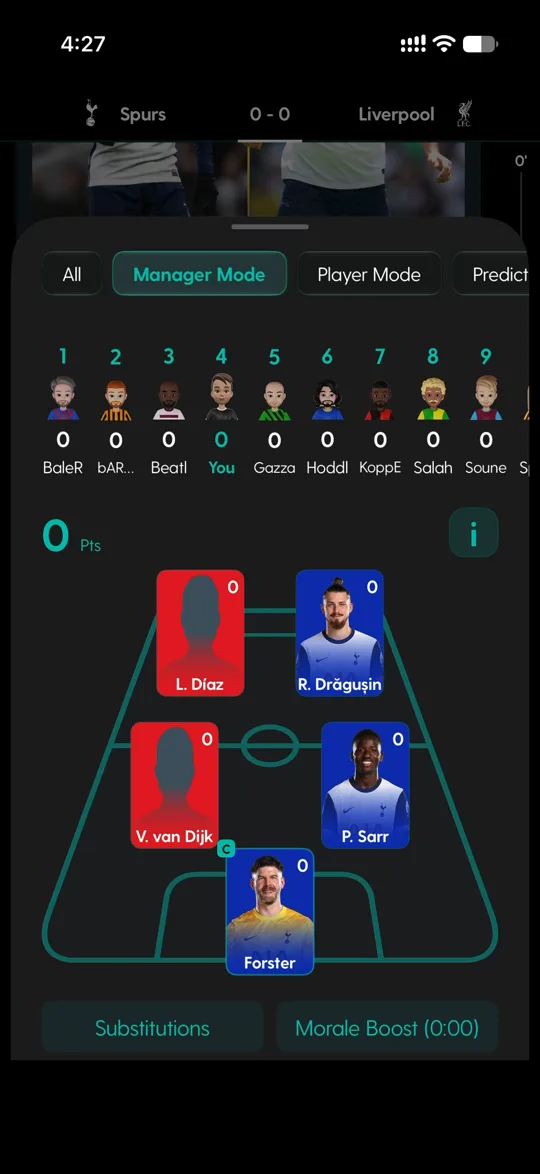
- Manager Mode: build a team
- Goals, cards and subs as they happen
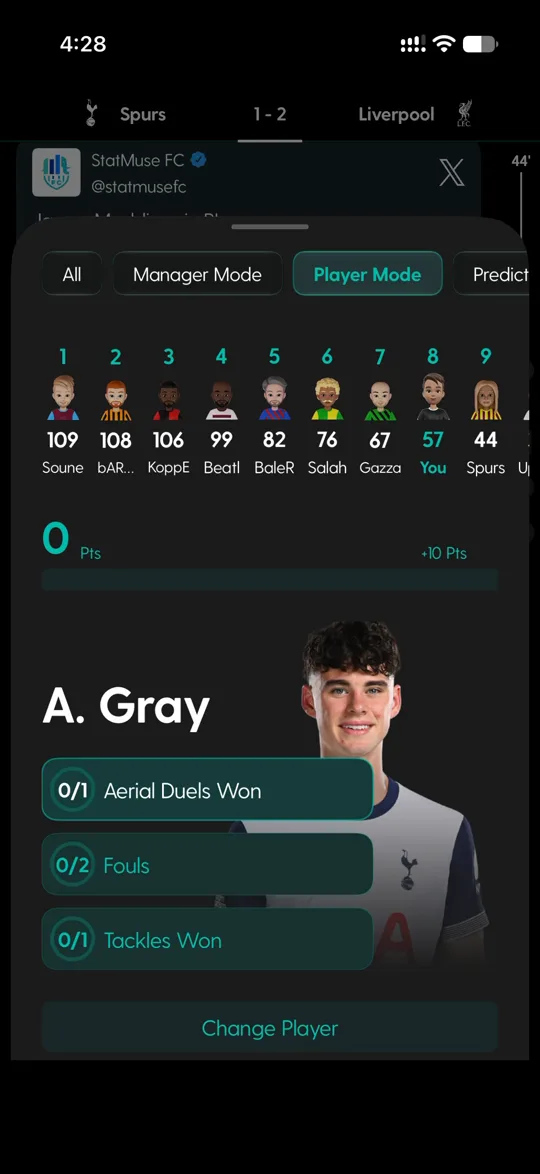
- Player Mode, predictions and quiz
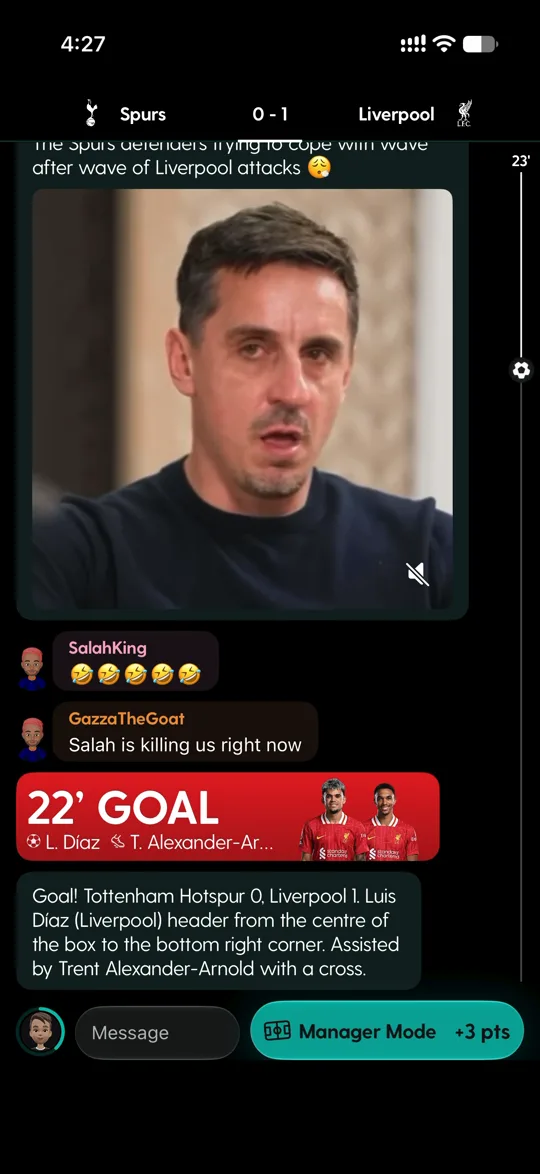
- 22nd minute: goal card and video post
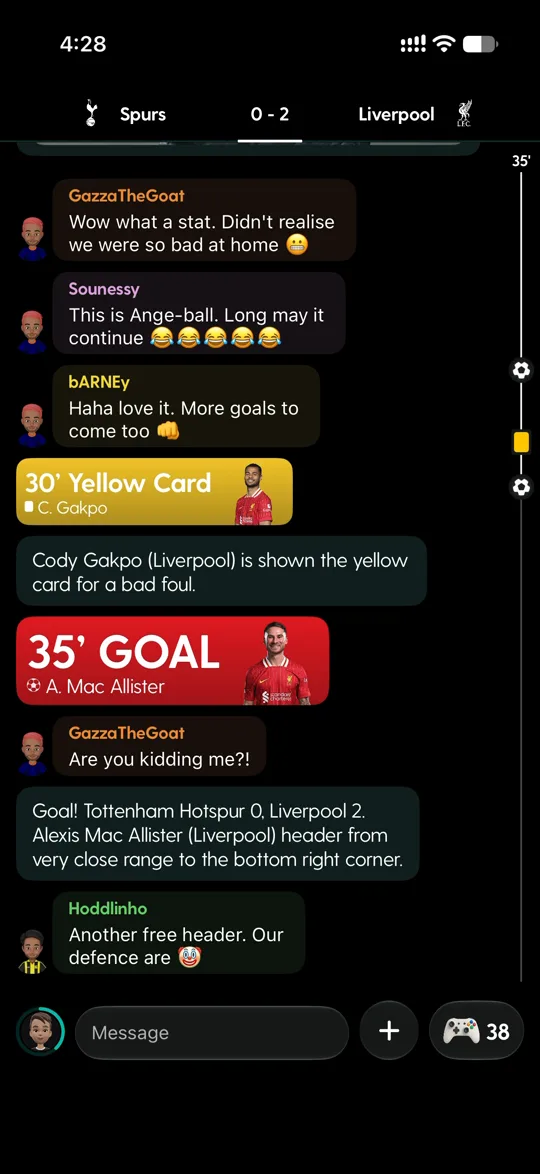
- Yellow card, then a goal
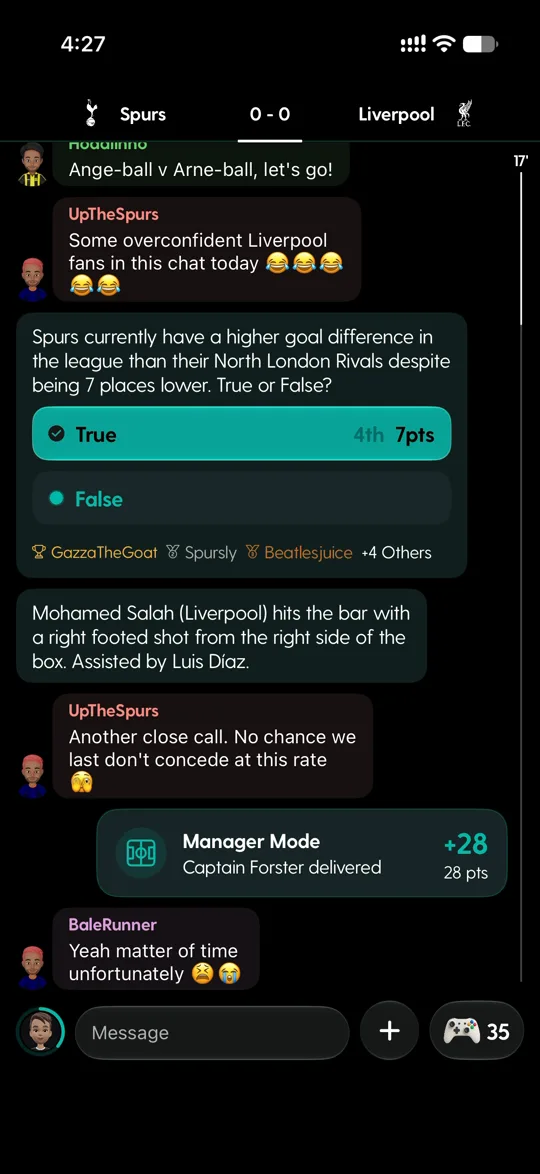
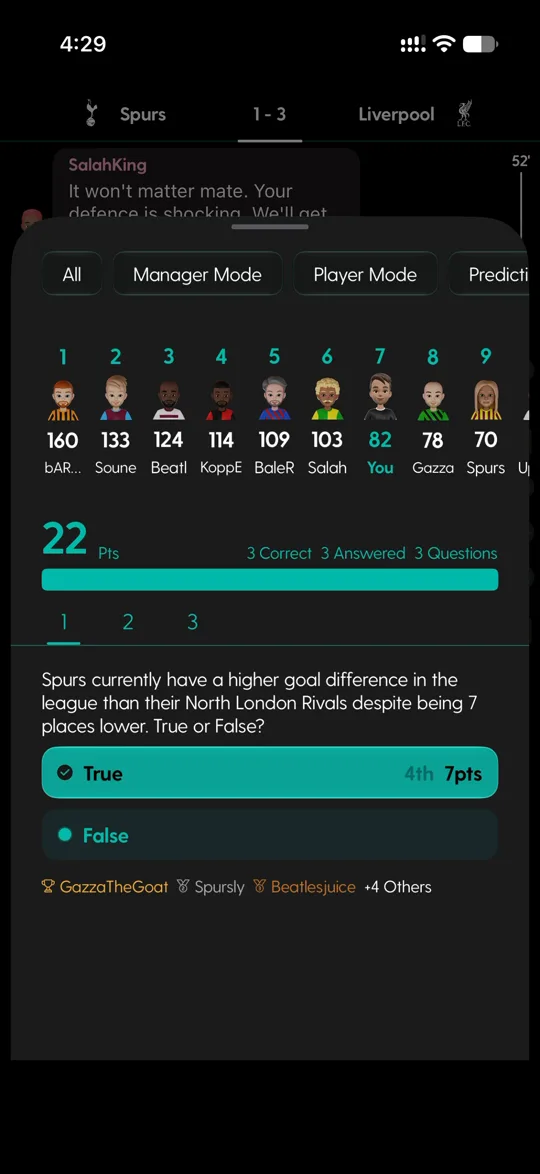
- True or false, answered live
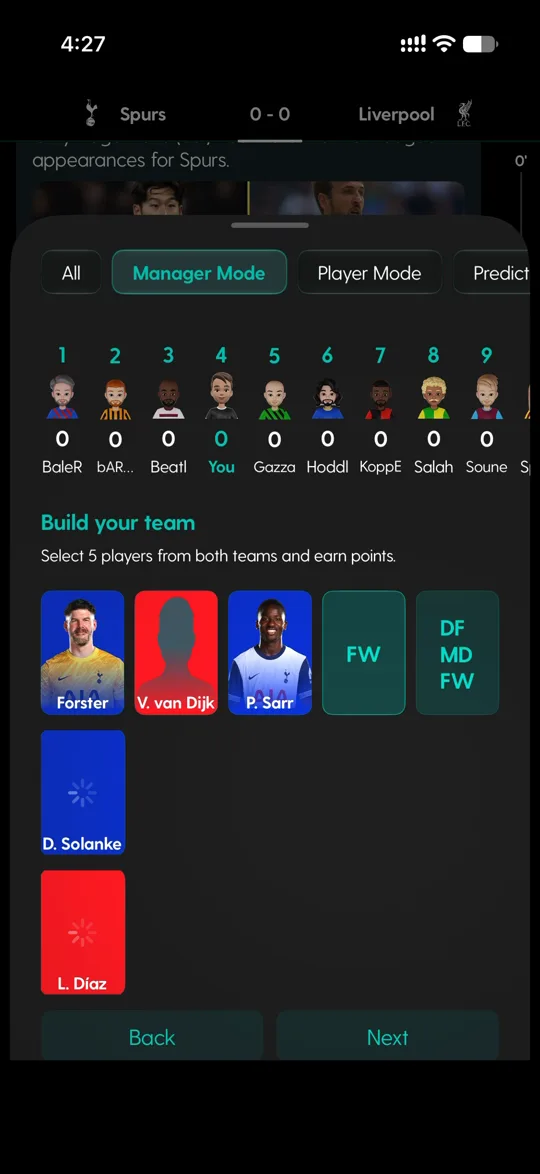
- Build your team
- Captain pick
- Player Mode targets
- Quiz score and leaderboard
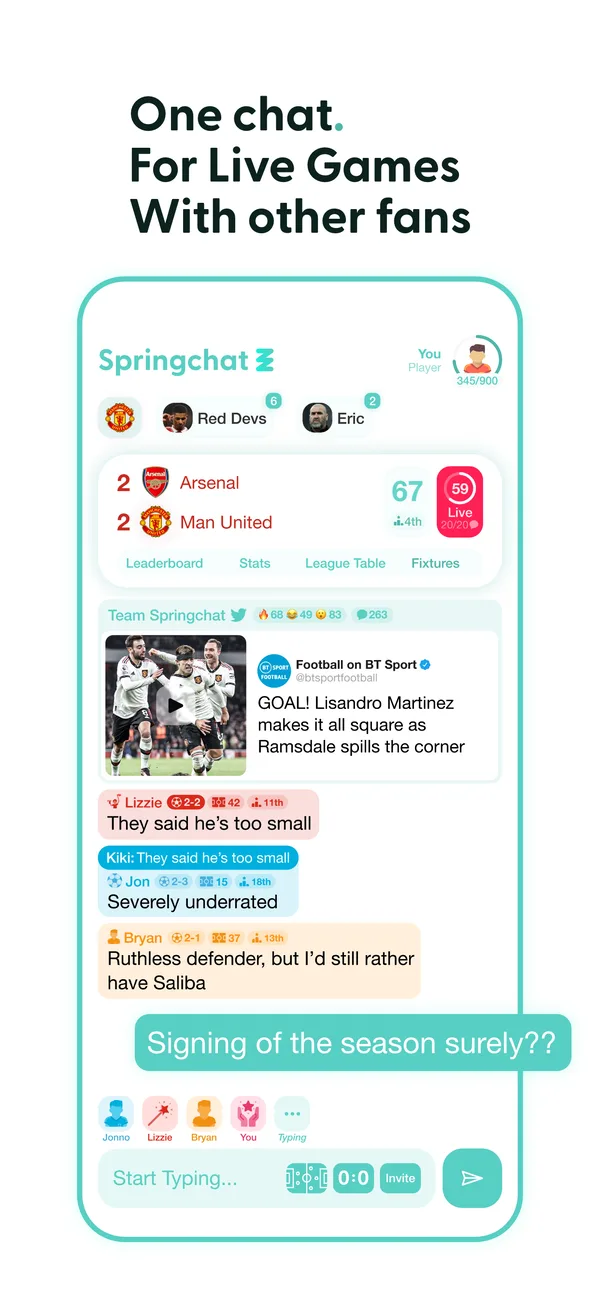
- Play Store: live games
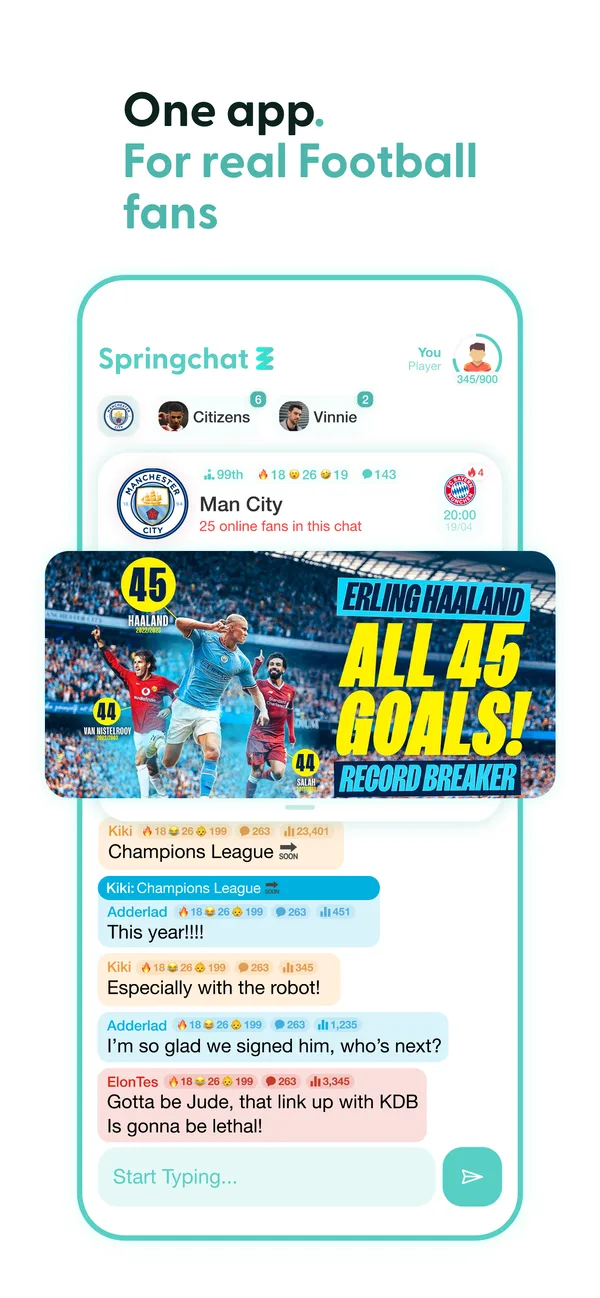
- Play Store: for real fans
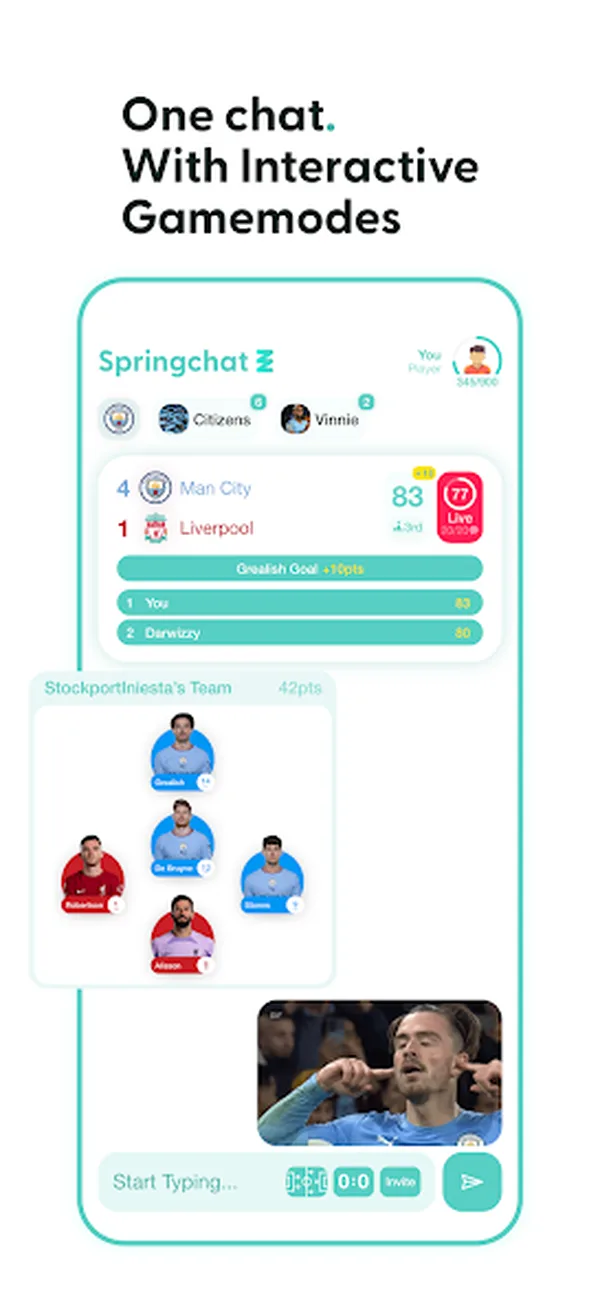
- Play Store: game modes
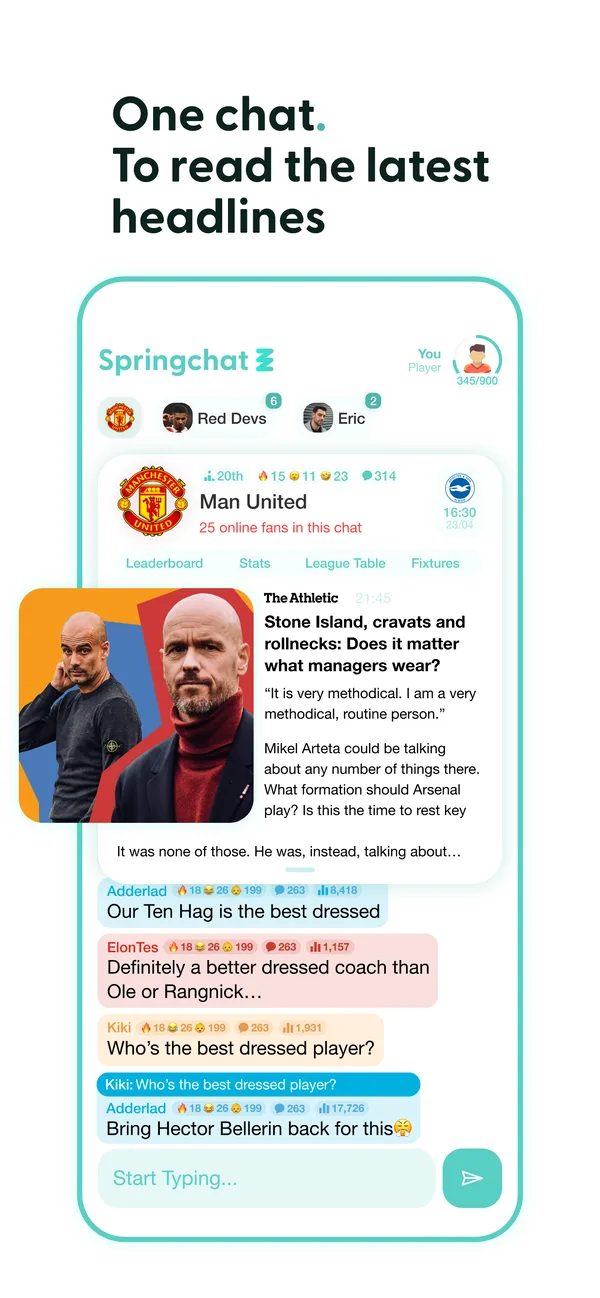
- Play Store: headlines
The problem
During a live match, fans talk somewhere else: group chats, social feeds, clip sites. Springchat’s partners (broadcasters, leagues, sports apps) wanted that conversation inside their own product. That meant an SDK they could initialise once and trust on their biggest days.
What I built
I was the sole architect of the Android chat SDK and led reviews of the iOS SDK releases. The SDK handles the socket lifecycle, message delivery, live rooms, reactions and the game mechanics layered on top, and exposes a small surface to the host app.
Three enterprise clients shipped it, with a combined reach of more than a million fans.
Fast enough for a goal
A goal turns a quiet room into a flood in under a second. Getting delivery under 100ms took careful WebSocket handling, concurrency tuning so the UI thread never waits on the network, and background sync so a fan who backgrounds the app comes back to a complete room.
Easy to adopt
Partners integrate faster when the SDK feels native. Compose, Kotlin and MVVM, plus documentation written for the partner’s engineers, cut integration time by about 40%. CI/CD with GitHub Actions and Gradle tuning halved build and release time for our own team.